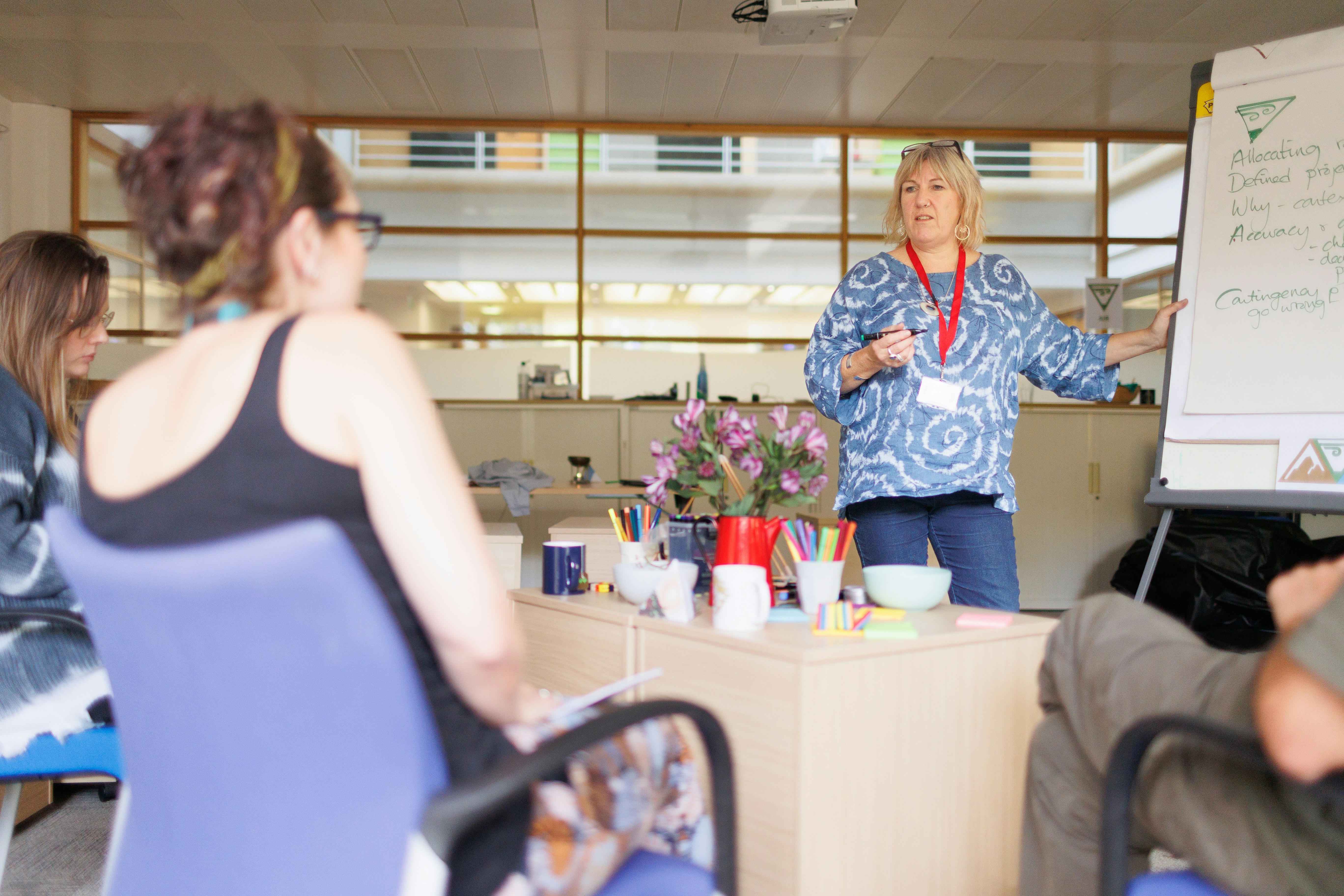
Presentation Training for Engineers: Skills That Carry Beyond the Interview

Engineers present constantly. Design reviews, client progress meetings, public hearings, and pursuit interviews all call for the same core skill: explaining technical work to people who need to make decisions. Presentation training for engineers develops that skill deliberately, so it does not depend on natural talent or years of trial and error.
Know the Decision the Audience Must Make The sections below walk through the steps that matter most to engineering practices, in the order they tend to come up.
Every presentation should help someone decide something. Training begins by asking what that decision is: approve the alternative, fund the study, select the firm. Once the decision is clear, the content can be pared down to what supports it. Engineers who skip this step often present everything they know, and the decision gets lost.
Organize Around Three Points
Audiences remember a small number of ideas. Training encourages engineers to identify three main points and build the talk around them. Supporting data is used to back each point, not to stand on its own. The structure also helps speakers recover if they lose their place, since they can return to the three points as anchors.
Design Slides That Support Speaking
Many engineering slides are built as documents that can be read later. Training teaches the difference between a slide for presenting and a handout for reference. Presenting slides use a short title that states the takeaway, one graphic, and minimal text. Handouts carry the detail.
Develop a Comfortable Speaking Style
Speaking style is a skill with practical techniques. Slowing down, pausing after key points, and avoiding filler words can be learned through practice and feedback. Short recorded exercises help engineers see what the audience sees. Most people improve noticeably in a few sessions when the feedback is specific and kind.
Handle Technical Questions Under Pressure
Questions from clients and reviewers can be sharp. Training includes practice responding to challenges about assumptions, costs, or risks. A useful technique is to restate the question, answer in one or two sentences, and check whether the answer was sufficient. That approach keeps answers concise and shows respect for the person asking.
Build a Shared Approach Across the Firm
When several engineers on a team present differently, the firm can appear disorganized. Shared training gives people common tools: a template for the opening, an agreed approach to slides, and a standard rehearsal process. Consistency makes the whole group look prepared, and it reduces the preparation time for each new presentation.
Apply the Skills to Public Meetings
Many engineers present at public hearings and community meetings, where the audience may be skeptical or unfamiliar with technical terms. Training should include practice with these settings: explaining a project in plain language, responding calmly to criticism, and acknowledging concerns without promising what cannot be delivered. Short handouts with a simple map and a timeline help residents follow along. Engineers who prepare for questions about noise, traffic, and cost tend to leave a better impression, and the project benefits from a community that feels informed rather than surprised.
Give Feedback That Can Be Used
Useful feedback names one behavior, explains the effect, and suggests a change. Saying that a slide had too much text is less helpful than saying that the audience stopped listening while reading it, and recommending a single chart instead. Training programs that teach colleagues to give feedback this way build a culture of steady improvement.
The Bottom Line
Presentation training for engineers produces skills that apply well beyond a single interview. Clear purpose, simple structure, supportive visuals, and practiced delivery help engineers communicate their work to the people who rely on it.